Why Trailer Maintenance Is Still a Weak Link — Even at Well-Run Fleets
Summary
Trailer PMs can slip even at disciplined fleets, and it’s not just a budget problem. Trailers resist maintenance discipline structurally, with no daily owner, no dashboard warning for most failures, and unreliable mileage triggers. That turns into real CSA and legal exposure, not just a maintenance headache. The fix isn’t simply caring more; it’s redesigning the program around how trailers actually move.
Picture a regional fleet doing everything right. They’ve got a preventive maintenance (PM) program on paper, maintenance software that sends alerts, a budget that isn’t held together with duct tape and prayer, and a maintenance manager who genuinely cares whether their equipment makes it home in one piece.
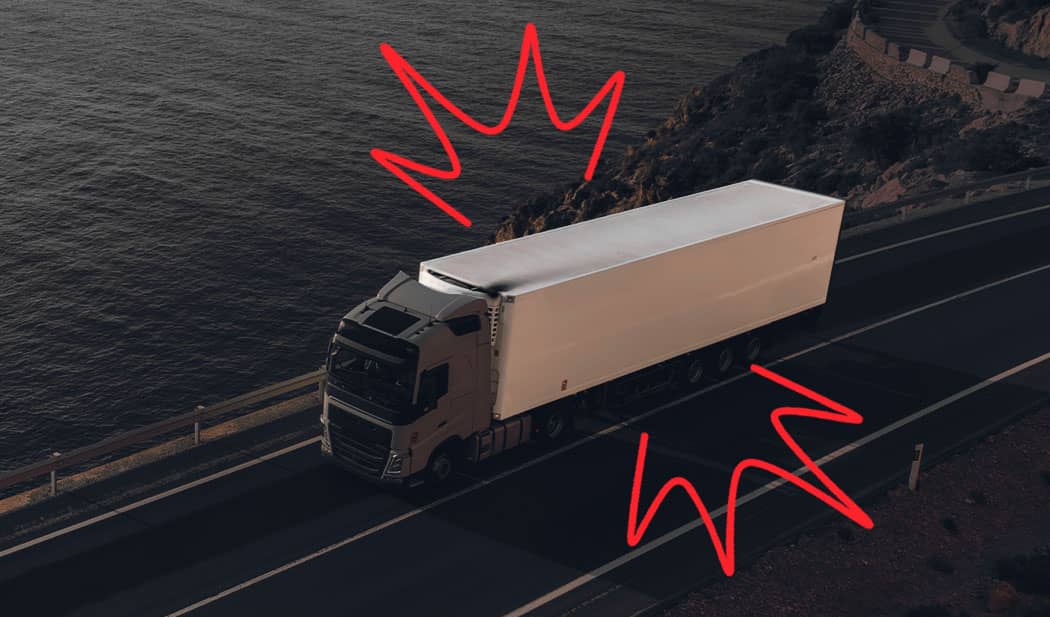
And then a trailer has a wheel-end fire on I-80, or fails a roadside inspection over brake components nobody had eyes on in months.
How does that happen at a fleet that’s supposedly doing everything right?
The easy answer is that they weren’t, actually, doing everything right — somebody dropped the ball. But talk to enough fleet managers and a less comfortable pattern shows up: trailer maintenance doesn’t fall apart because people are careless. It falls apart because trailers are hard to keep on a PM schedule, in ways that have nothing to do with effort or budget. Trucks get fixed. Trailers get “we’ll catch it next time.”
The Budget Excuse Is Real. It’s Just Not the Whole Story.
The standard explanation goes like this: a new Class 8 truck costs a heck of a lot more than a dry van trailer. When money’s tight, the expensive asset gets the attention. This cost gap naturally pushes fleets to prioritize their power units over trailers.
There’s also a difference in program maturity. Trucks simply get more attention because they’re more often built into a PM program in the first place — trailers get bolted on as an afterthought, if they get bolted on at all.
Both of those things are true. Neither of them explains why fleets that have closed the budget gap — the ones with real trailer PM line items and dedicated techs — still watch trailers slip through the cracks. If money were the whole problem, throwing money at it would fix it. It doesn’t, always. So something else is going on.
Trailers Don’t Misbehave the Way Trucks Do
Trailers are just bad at asking for help.
Nobody’s watching them day to day.
A truck has a driver who lives in it eight-plus hours a day and notices when something feels off — a shimmy, a whine, a warning light. A trailer gets dropped at a customer dock, hitched to a different truck next week, and generally treated like furniture. Nobody’s building a relationship with it. Once operations get busy and the focus shifts entirely to moving freight, anything not clearly flagged in a tracking system tends to fall through.
Many trailer failures don’t trip a warning light, either. Trailers built since 1998 do have an ABS malfunction lamp, and trucks built from 2001 onward have a dedicated second in-cab lamp that flags a trailer ABS fault too. However, plenty of trucks on the road predate that requirement and never show it in the cab at all. Even where the lamp exists, it only covers one system. Wheel-bearing heat, brake lining wear, and a hairline crack working its way across a cross-member don’t announce themselves to anyone. They just get worse until a tech happens to be underneath the trailer looking for them, or until they don’t.
Mileage-based triggers have the same problem from a different angle. Many PM schedules run on mileage or time intervals, which works fine for a truck tied to one driver’s logs. A trailer that gets swapped between trucks and dropped at three different yards in a month, however, doesn’t accumulate a clean, trackable record the same way. Hubodometers, a cheap mechanical counter mounted right on the hub, exist precisely to solve this. And trailer telematics are increasingly common too. Most fleets already have access to one or the other; the real shortfall is installing them and actually reading them, which leaves the trigger mechanism shakier than the process it’s supposed to support.
Ownership gets murky, especially with interchange.
When trailers move between carriers or sit in a pool, often nobody knows whose PM window it is, and that ambiguity rarely gets resolved.
Techs are trained for the complicated half of the rig.
For a dry van or flatbed, this is straightforward: no engine, no transmission, less to master than a truck. That sounds like it should mean less to worry about. In practice it means techs are trained and staffed around power units, and trailer work becomes the thing that happens after the truck’s back on the road, not alongside it. (Reefer trailers break this logic entirely. They carry their own diesel-powered refrigeration unit with its own PM schedule. Servicing one often requires a tech with separate refrigeration/EPA 608 certification. If your fleet runs reefers, “simpler” isn’t the word for it.)
Put those together and you get a pattern. No one decided trailers don’t matter. The entire maintenance workflow just grew up around how trucks move through an operation — how ownership gets assigned, what triggers a PM, where technician attention goes — and trailers move through it differently enough that the same workflow doesn’t fit.
This Doesn’t Stay a Maintenance Problem
Missed trailer PMs don’t always stay contained to the shop. They can turn into compliance issues, and in some cases, legal ones.
The Federal Motor Carrier Safety Administration’s Compliance, Safety, Accountability program doesn’t distinguish between truck and trailer equipment — a trailer brake violation counts against a fleet’s safety score the same way a truck brake violation would, as Penske’s own trailer maintenance guidance points out. Legal exposure is part of the picture too, and juries aren’t getting more forgiving: trucking companies faced over $4.1 billion in “mega-verdicts” in 2024 alone.
None of this means every missed PM ends in a lawsuit. It’s just a reminder that a missed trailer inspection can carry weight well beyond the shop floor.
The Fix for Trailer Maintenance
The instinct, once you see all this, is to tell fleets to just care more about their trailers. That’s not really the fix, and it’s a little insulting to the fleet managers who already care plenty.
That’s the specific work — building a trailer inspection checklist that accounts for how trailers actually behave, not just what to check when one finally rolls into the shop. We’ll be covering exactly that soon. In the meantime, if you want the basics on PM checklists, we’ve covered that ground here.

Get news & tips right in your inbox.